

 Born in 1946 and brought up in Cupar, Fife, I was educated at the local school -


"Encouraging Discussions with Grampian Health Executives" says Stevenson
Following discussions about the future of Chalmers Hospital in Banff with Chairman of Grampian Health, Jim Roy and Chief Executive, Neil Campbell, MSP for Banff and Buchan, Stewart Stevenson commented,
"The lengthy uncertainty over the re-development of the Chalmers Hospital in Banff has been disappointing for a community which depends on this facilty. Staff have continued to provide a first class service despite the difficulties caused by the old-fashioned design and a considerable maintainance backlog. We must hope that the present level of vacancies does not grow further as morale continues to be hit.
"The timescale for key decisions about the Chalmers is now relatively short. I have been assured that we shall know where we stand by the end of October. Indications are that re-development will remain a high priority for Grampian Health but we must continue to campaign to ensure that that outcome is delivered from the present review."
Speaking about the steps which are expected after the October decision, Stevenson said,
"It is important that local people start to consider now, precisely what it is we need from our local hospital. After the principled decision to re-develop for which we presently campaign, I understand that Grampian Health will undertake a period of consultation about the services required in any new Banff facility.
"If our campaign is successful, as I expect it will be, we must avoid further delay by being able to respond rapidly to the expected consultation.
"The signs from Grampian Health's new executives are encouraging. I believe there is a willingness to listen. But we must make sure that we speak with one voice and be seen to speak for Banff."
Note:
There will be a meeting organised by Friends of Chalmers Hospital at 7.45pm tonight [Thursday] in St. Mary's Church Hall, Banff.
Karen Adam is now the MSP for Banffshire and Buchan Coast

27 January 1999
Bank's Director of Technology Innovation Selected as Prospective Candidate for Scottish Parliament
Bank of Scotland is pleased to announce that a member of its senior management has been selected to stand as a candidate at the Scottish Parliamentary elections on 6th May 1999, Stewart Stevenson, the Bank’s Director of Technology Innovation, will stand for the Scottish National Party in the Linlithgow constituency.
Peter Burt, Bank of Scotland’s Group Chief Executive, commented;
Commenting On his selection, Stewart Stevenson said:
Peter Burt, Bank of Scotland’s Group Chief Executive, commented;
“The Bank is delighted to support all staff standing for Parliamentary or Local Authority elections. As we have made clear, we support good government and not any one political party. If Stewart is elected, we shall be sorry to lose him but the Scottish Parliament will benefit from his skills and experience. If he is not elected, we shall be delighted to welcome him back as a full time member of staff.”
Commenting On his selection, Stewart Stevenson said:
“I am delighted that Bank of Scotland encourages staff who wish to serve the community through representative politics. At a time of change in politics, it is important that businesses allow experienced members of their staff to engage in the political process. This will help ensure that elected representatives are drawn from varied backgrounds to the benefit of the people and businesses alike.”
1 May 1989
from Stewart Stevenson's archives: The Faraday Lectures 1989/90
'The effect of the discovery of electricity on modem banking has been revolutionary,' says Stewart Stevenson, Bank of Scotland Senior Manager responsible for computer operations. 'The age of hard currency is in decline. Billions of pounds move around the world every day simply as electronic transfers. Bank of Scotland has been one of the most successful banking organisations in its creative use of new technology, and it is therefore entirely appropriate that Bank of Scotland is presenting this year's annual Faraday Lecture.'
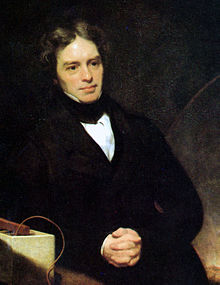
The Lecture, entitled 'Electric Currency', will be given in twenty locations around Britain between September 1989 and March 1990 by Bank staff. 'We shall look briefly at the evolution of money,' explains Stewart 'from the bartering of goods to the concept of gold bullion, from the introduction of coins and notes to the early days of electronic banking. Our prime aim is to reshape the public perception of money through our demonstrations of the operation of national and international electronic money transmission services. However, we do emphasise very strongly that banking is still all about service and people - people on both sides of the counter.'
Modem electronic banking has a wide fascination. The protection of invaluable data stores is a common cause for concern. 'Our computer programs have been developed over 20 years and would cost over £200 million to rewrite today. We have to ensure that we don't lose them! The computers in the Bank hold two complete sets of data, and to avoid catastrophe through power failure for whatever reason, we have eight generators on site - producing enough power to supply a village of 1,000 homes. Our equipment detects a power failure even of two hundredths of a second, and while it would take ten seconds to start up alternative power, we have 50 tons of batteries which would step in and support the system in that period. In addition to all of that, we have 73,000 gallons of fuel. All in all, you can consider that your 'Electric Currency' is quite safe with the Bank!'
The Lecture, which gives a practical insight into technical, security and business developments of electronic banking, will be attended by secondary school children from all over the country, who will also have the opportunity of winning £1,500 and an Apple Macintosh Desktop Publisher through a competition to design and market a banking board game. All the evening lectures are open to the public, and an application form for an allocation of free tickets may be obtained from your local branch.
Subscribe to:
Posts (Atom)


